Find the best sports injury chiropractor for your recovery in 2026. Get expert care to heal faster and return to peak performance. Book your consultation today!




You wake up sore after a long run, a hard lift, a ski day, or a weekend round of golf. The pain isn't dramatic enough to send you to the ER, but it's enough to change how you move. You shorten your stride. You avoid rotation. You tell yourself it'll settle down if you rest for a few days.
Sometimes it does. Often it doesn't.
That's where a sports injury chiropractor fits in. The right approach isn't just about getting you out of pain for the next workout. It's about finding the movement fault, tissue overload, joint restriction, or disc irritation that keeps pulling you back into the same cycle. For active adults, that difference matters. It changes how quickly you return, how well you perform, and whether the injury becomes a recurring problem.
A sports injury chiropractor is a musculoskeletal clinician who focuses on how the body moves under load. That matters if you're a runner with knee pain, a lifter with sciatica, a tennis player with elbow irritation, or a golfer who can swing but can't rotate without a catch in the low back.
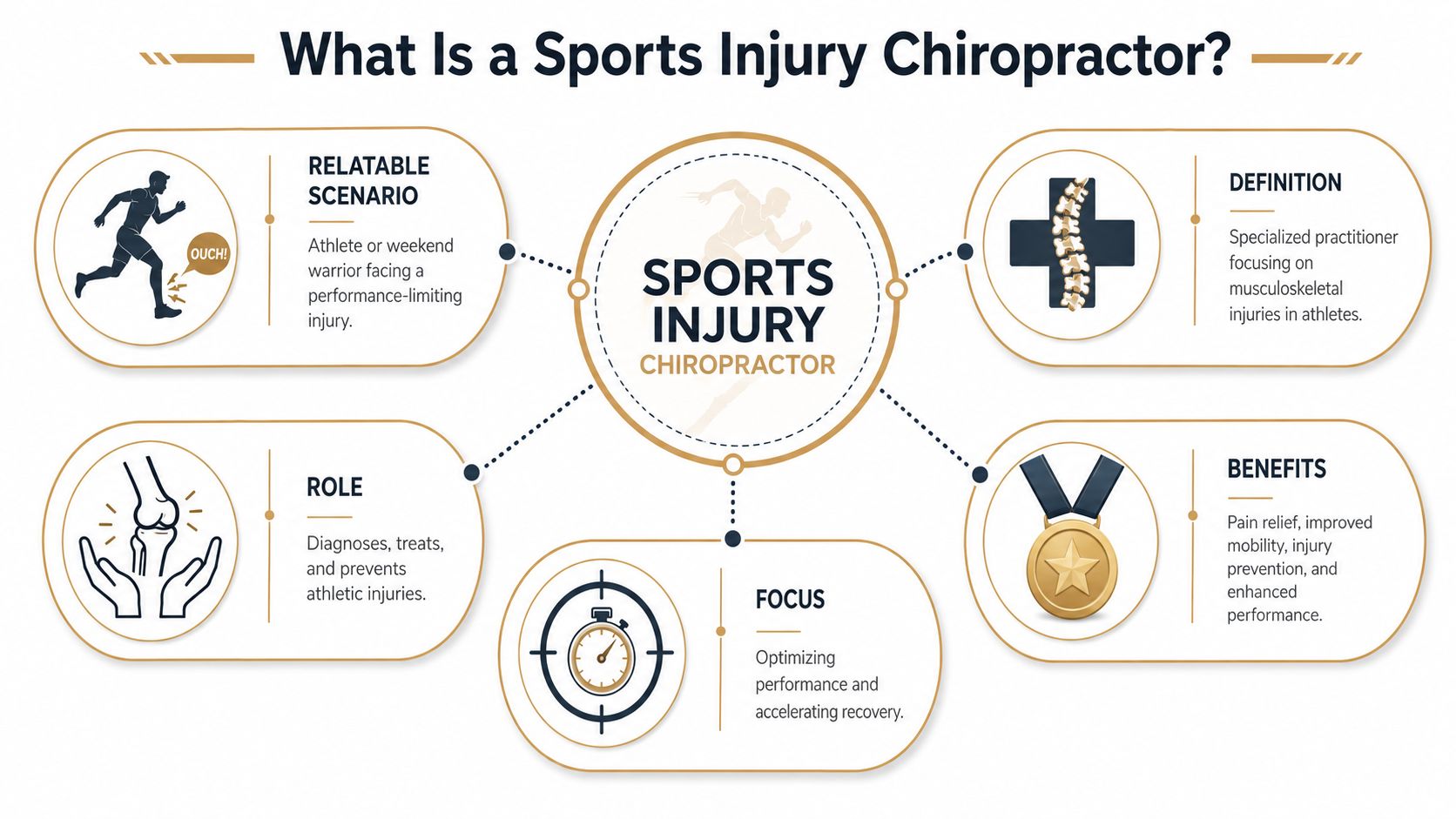
Many people still assume chiropractic care means neck and back treatment only. That's outdated. A descriptive study of international sports chiropractors found that 37% of patients presented with a non-spinal musculoskeletal primary complaint, and these clinicians commonly used soft tissue therapy in 97% of care, mobilization in 94%, and rehabilitative exercise in 76% of care plans, according to the published sports chiropractic study.
In practice, that means care often includes joint assessment, soft tissue treatment, mobility work, realignment where appropriate, rehabilitation exercise, and a personal exercise plan that matches the sport and stage of healing.
Pain is only part of the problem. The bigger question is why the pain showed up in the first place.
A sports injury chiropractor looks at factors such as:
Practical rule: If treatment only calms symptoms and never changes the way you move, the injury often comes back.
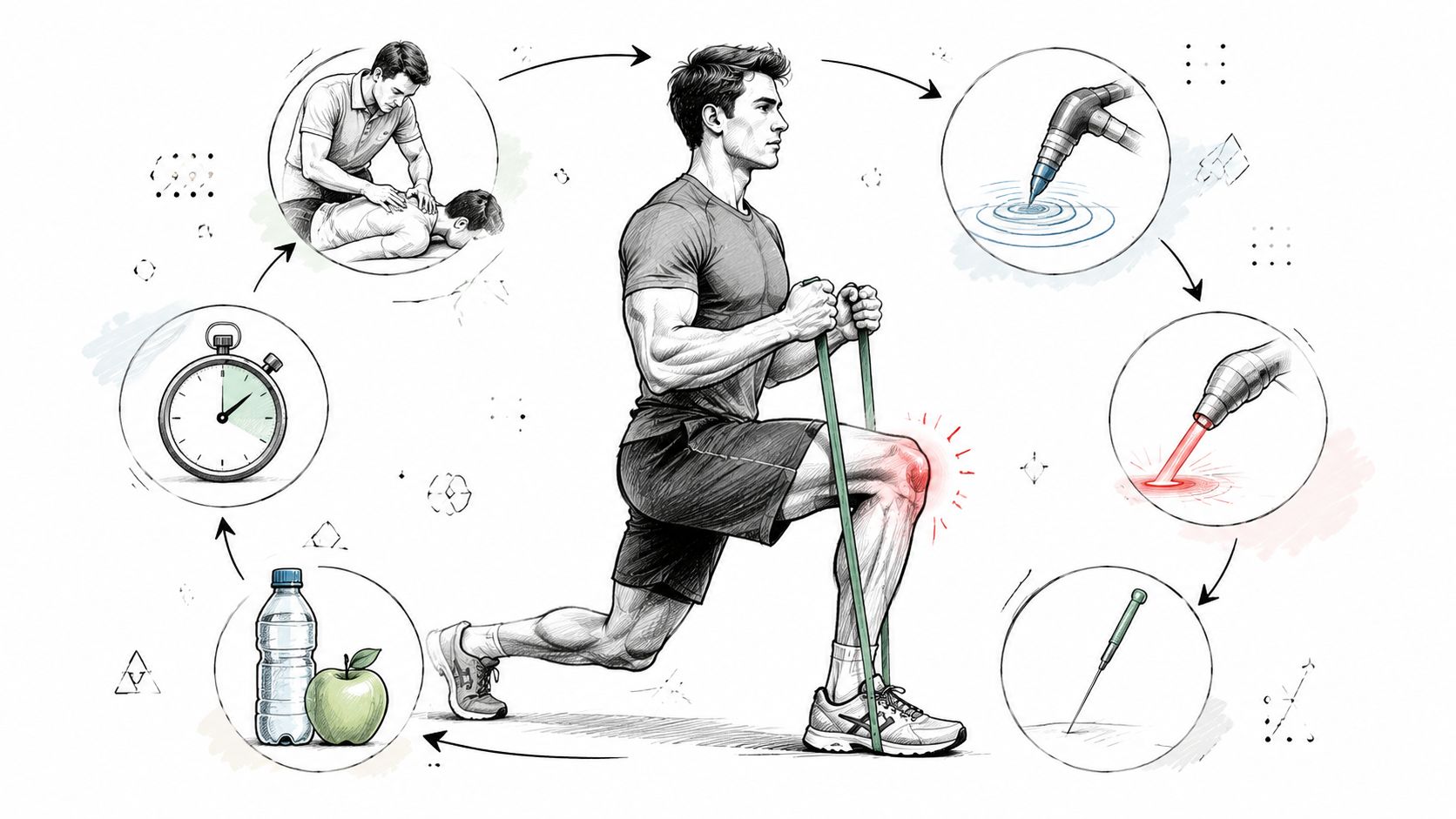
That's why effective care usually combines adjustment, mobility therapy, soft tissue work, pain relief strategies, and rehabilitation exercise instead of relying on one intervention. Some athletes need chiropractic adjustment and decompression. Others need massage therapy, muscle stimulation, acupuncture, or nutrition counseling to support healing and training load.
The point isn't to do more. It's to choose the right inputs at the right time.
Athletes rarely come in saying, “My biomechanics are off.” They say their knee hurts on stairs, their shoulder pinches overhead, or their leg goes numb halfway through a run. Those details matter because the same diagnosis can come from different movement problems.
A sports injury chiropractor commonly treats injuries well beyond the low back.
If you want a more sport-specific breakdown of common conditions and when to seek care, the sports injuries page gives a useful overview.
The mistake many active people make is choosing treatment based on the body part alone. A sore knee doesn't always need the knee treated first. A painful shoulder may improve faster when the rib cage and upper back start moving better.
| Common Injury | Primary Aspen Falls Treatment Approach |
|---|---|
| Sciatica | Spinal Decompression with the DRX 9000, decompression, chiropractic adjustment |
| Herniated disc symptoms | DRX 9000 spinal decompression, realignment, mobility therapy |
| Runner's knee | Rehabilitation exercise, mobility therapy, adjustment |
| Tennis elbow or tendon overload | MLS Laser Therapy, SoftWave Therapy, massage therapy |
| Rotator cuff irritation | Adjustment, massage therapy, rehabilitation exercise |
| Shin splints | Mobility therapy, muscle stimulation, personal exercise plans |
| Golf-related back pain | Golf Movement Screening, adjustment, mobility therapy |
| Muscle strain or overuse irritation | Massage therapy, SoftWave Therapy, personal exercise plans |
Golf is a good example. Many players think back pain comes from a single bad swing, but repeated rotation with limited hip mobility or poor trunk sequencing usually explains the situation. The discussion of Caddie Wheel insights on golf pain lines up with what shows up clinically. When swing mechanics and body limitations don't match, pain tends to repeat.
The injured area is often the victim, not the cause.
That's why a multimodal plan works better than a one-note plan. If the issue involves irritated tissue, restricted joints, and weak control, treatment has to address all three.
The first visit should feel clear, not rushed. Most athletes show up with two concerns at the same time. They want pain relief, and they want to know whether they can keep training, modify training, or stop completely for a period.
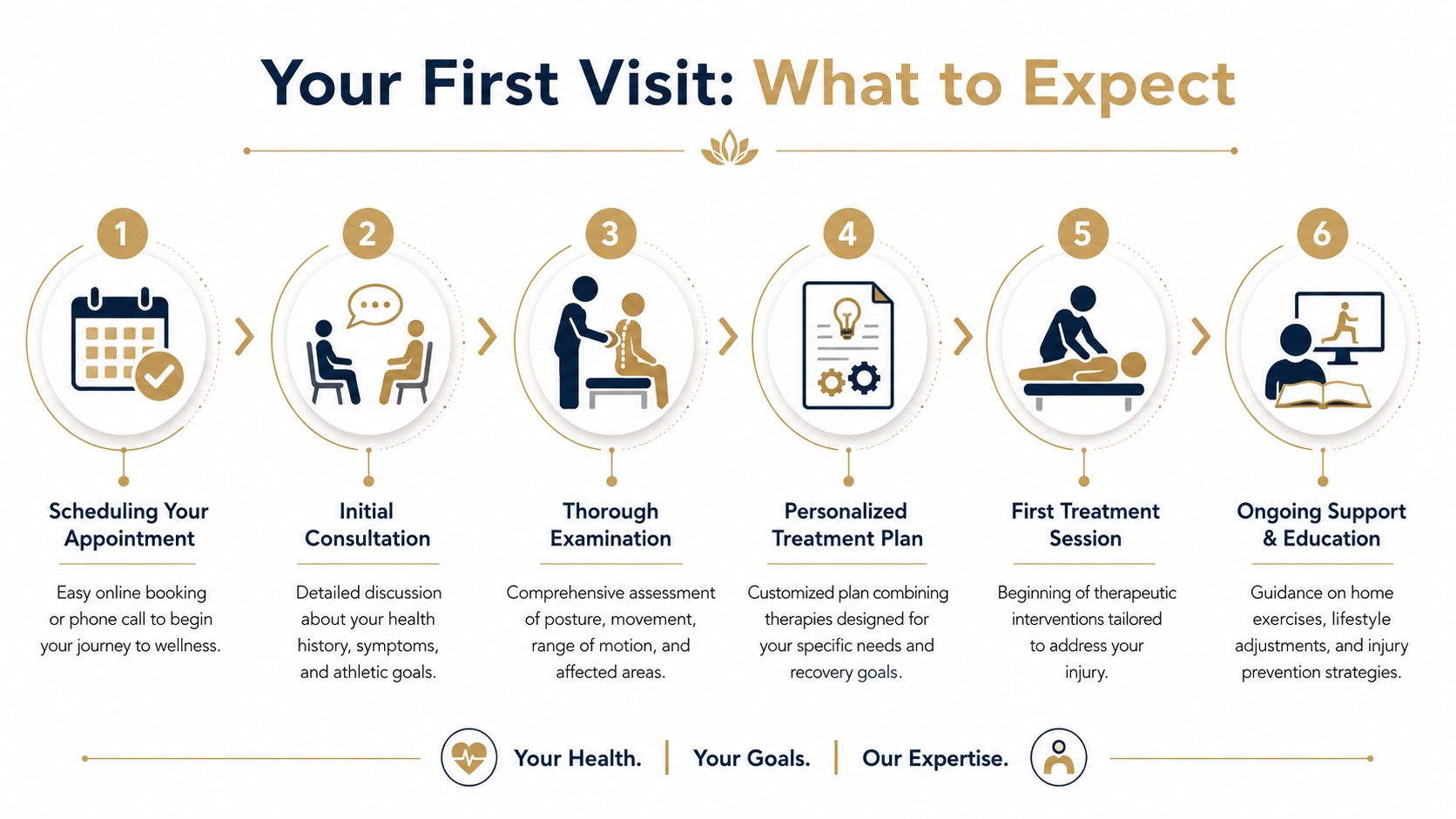
A useful evaluation starts with specifics. Not just “my shoulder hurts,” but when it hurts, what loads it, what eases it, whether symptoms travel, and what your sport demands from that area. Training volume, recent changes, prior injuries, work posture, sleep position, and recovery habits all help explain why symptoms appeared now.
If you're preparing for your first appointment, the new patient information page can help you know what to bring and how the visit typically flows.
The physical exam usually includes orthopedic testing, range-of-motion testing, movement screening, and a neurological check when symptoms suggest nerve involvement. For one athlete that may mean assessing squat mechanics, single-leg balance, and hip control. For another it may mean checking reflexes, sensation, strength, and positions that reproduce radiating pain.
A thorough exam also looks for what not to treat conservatively. Severe neurological changes, suspected fracture, major instability, or findings that don't fit a routine sports injury may call for referral or co-management.
Not every injury needs imaging on day one. But sometimes it's the right move.
External X-ray or MRI referral may be recommended when the history and exam point to disc pathology, significant trauma, persistent neurological signs, suspected structural damage, or when recovery isn't following the expected pattern. Good care doesn't guess when better information is needed.
A strong first visit ends with a clear explanation. What's irritated, what's likely driving it, what can improve, and what the next few weeks should look like.
That plan might include chiropractic care, rehabilitation exercise, decompression, acupuncture, massage therapy, mobility therapy, or simple activity modification. The details depend on whether the problem is acute, chronic, load-related, disc-related, or tied to a specific sport skill.
You shouldn't leave wondering what happened. You should leave knowing why it hurts and what comes next.
Athletes recover better when treatment fits the problem instead of forcing every injury into the same template. Some conditions need hands-on joint work. Some need tissue calming and healing support. Some need decompression because nerve irritation and disc mechanics are the main barrier.

Chiropractic adjustment and realignment can help when joint restriction is altering how force moves through the body. If the low back isn't moving well, the hip and hamstring often absorb stress they shouldn't. If the thoracic spine is stiff, the neck and shoulder usually pay for it.
Massage therapy and mobility therapy help from a different angle. They reduce soft tissue guarding, improve tolerance to movement, and make it easier for the body to accept corrective exercise. Muscle stimulation can also help in selected cases when pain is inhibiting normal activation.
Manual care works well when it opens the door to better movement. It works poorly when it's used as a substitute for rebuilding strength, control, or sport-specific tolerance.
At this juncture, integrated care becomes more precise.
MLS Laser Therapy is commonly used to reduce inflammation and support tissue recovery. SoftWave Therapy is often helpful when tendon, fascia, or soft tissue healing needs a stronger regenerative stimulus. Acupuncture can play a useful role in pain modulation and reducing protective muscle tension.
For athletes dealing with disc-related low back pain, nerve irritation, or sciatica, Spinal Decompression with the DRX 9000 offers a different option than forceful manual care alone. Clinical studies on the DRX9000 system report success rates between 71% and 89% for patients achieving at least a 50% reduction in pain, and one study found 82% of patients scheduled for back surgery were able to avoid it after completing therapy, as summarized in this review of DRX9000 spinal decompression outcomes.
That doesn't mean decompression is for every back injury. It tends to make more sense when symptoms fit a disc pattern, especially when sitting, bending, or nerve referral into the leg is a major feature. It makes less sense when the main issue is a simple muscle strain with no neurological component.
Passive care can calm things down. It usually doesn't make performance durable by itself.
That's why recovery should include a progression of:
For patients who need a coordinated plan that combines chiropractic care, decompression, and exercise progression, rehabilitation exercise support can be part of that process.
Clinical reality: The treatment that feels best on day one isn't always the treatment that keeps you healthy six weeks later.
A non-surgical plan works best when each tool has a job. Adjustment restores motion. Decompression unloads irritated disc structures. Laser, SoftWave, massage, and acupuncture help reduce the barriers to movement. Exercise and mobility work teach the body how to keep the gain.
Pain-free doesn't always mean problem-free. Many athletes return to activity once symptoms settle, but they return with the same movement habits, the same load errors, and the same blind spots that created the injury.

The preventive side of sports chiropractic is less about random stretching and more about screening for weak links before they become symptomatic. That includes posture, balance, rotational control, foot mechanics, trunk stiffness, deceleration strategy, and joint mobility where the sport demands it.
A golfer may need a different plan than a skier or a runner. Golf Movement Screening matters because swing pain often reflects a mismatch between mobility, sequencing, and force transfer. If the body can't create rotation cleanly, the low back usually absorbs what the hips and thoracic spine failed to provide.
For a broader perspective on how posture influences performance and long-term wear, optimizing health through posture is a worthwhile read.
Generic advice tends to sound helpful and perform poorly. “Stretch more” doesn't identify whether an athlete is overloading the lead hip, leaking force during change of direction, or rotating from the lumbar spine instead of the thoracic spine.
A 2025 study found that clinics using advanced screening such as motion capture or force plate analysis reduced overuse injury incidence by 41% in high-performance athletes, according to the screening discussion at SCUHS. That's a meaningful distinction between a standard adjustment visit and a performance-based prevention model.
Effective prevention usually includes a mix of the following:
Athletes stay healthier when they stop treating recovery as something that starts after injury.
The most resilient athletes usually aren't the ones who never feel sore. They're the ones who catch problems early, adjust load intelligently, and keep refining movement quality as training intensity rises.
The practical advantage of an integrated clinic is simple. You don't have to patch together your care from separate offices that rarely communicate. A sports-related problem may involve joint mechanics, soft tissue overload, nerve irritation, conditioning deficits, and recovery habits all at once. Those issues are easier to manage when the team can coordinate the plan directly.
That coordinated model can include chiropractors, massage therapists, acupuncturists, mobility specialists, and nutrition support working from the same exam findings and recovery goals. For one patient, the priority may be spinal decompression and sciatica treatment. For another, it may be massage therapy, mobility therapy, and rehabilitation exercise after an overuse injury. Car accident treatment can also overlap with sports care when a prior collision changed neck motion, balance, or tolerance to training.
A multidisciplinary setup also helps with trade-offs. If a patient doesn't tolerate manipulation well in an acute phase, care can shift toward decompression, laser, soft tissue treatment, acupuncture, or lower-force options while the tissue settles.
Aspen Falls Wellness serves patients in Salt Lake City and Sandy, Utah, which makes consistent follow-up more realistic for active adults balancing training, work, and family schedules. Insurance participation includes multiple plans such as Aetna, BCBS, Cigna, Humana, GEHA, and Motiv Health, though benefits and coverage should always be verified before starting care.
Good treatment plans fail when they're too complicated to follow. Good access improves consistency, and consistency improves outcomes.
That matters more than people think. Even a strong program loses traction when scheduling, referrals, and communication create too much friction. When care is organized clearly, patients tend to understand the plan better and stick with it long enough to see whether it's working.
If you're active, recurring pain changes more than comfort. It changes confidence. You hesitate during the cut, the lift, the downswing, the sprint, or the descent. Over time, that hesitation affects performance as much as the injury itself.
A sports injury chiropractor should do more than provide short-term relief. The job is to identify the true mechanical problem, use the right non-surgical tools for the stage of healing, and help you return with better movement than you had before the injury. That may mean chiropractic care, spinal decompression, SoftWave Therapy, MLS Laser Therapy, acupuncture, massage therapy, mobility work, or a personal exercise plan. The right answer depends on the tissue involved and the demands of your sport.
Recovery also doesn't end when pain drops. It continues through strength rebuilding, movement correction, and smarter prevention. If you want a useful outside perspective on that broader process, the guide to best athlete recovery techniques offers ideas that fit well alongside a structured clinical plan.
You don't have to keep guessing whether rest, stretching, or pushing through it will solve the problem. When symptoms are limiting how you train, compete, or recover, a clear evaluation is usually the fastest way to stop losing time.
If you want a personalized plan for pain relief, spinal decompression, rehabilitation exercise, or sport-specific recovery, schedule a consultation with Aspen Falls Wellness.

Stay updated with the latest chiropractic news and exclusive offers.